01 // EYEWITNESS HISTORICAL MEMOIR
The 2018 Student-Led Road Safety & Civic Movement
From Tragedy on Airport Road to Civic Order at Shapla Chottor: How High School Students Reimagined National Conscience
On July 29, 2018, following the tragic road incident on Airport Road that took the lives of students Mim and Rajib, students from Notre Dame College, Shaheed Ramiz Uddin, and colleges across Dhaka took to the streets in a peaceful, self-organized movement. Students created dedicated emergency vehicle lanes, verified vehicle licenses, and advocated for strict public transit safety governance. This formative experience ingrained a deep sense of civic duty, ethical accountability, and systemic discipline.
DAY 01 // 29 JULY 2018
The Catastrophe on Airport Road: Tragedy Ignites a Nation
Two Racing Buses, Seven Stolen Lives, and the Spark of Nationwide Grief
In the bustling streets of Dhaka, commercial bus racing had long been a perilous, everyday reality. Competing private operators routinely engaged in high-speed rushes, aggressively maneuvering heavy vehicles through crowded bottlenecks to contest waiting passengers at every intersection. On the afternoon of Sunday, 29 July 2018, that institutional recklessness culminated in unthinkable catastrophe on Airport Road.
Students from Shaheed Bir Bikram Ramiz Uddin High School and Cantonment College were gathered near the Radisson Blu hotel bus stop, waiting for their commutes home after morning classes. Two private transport buses—Jabal-e-Noor Paribahan and Balaka Paribahan—were engaged in an aggressive high-speed contest for curb space. In a split second of fatal negligence, the Jabal-e-Noor bus lost control, failed to brake, and violently plowed into the crowded passenger queue, crushing young students against the roadside wall.
Two students—Dia Khanam Mim and Abdul Karim Rajib—died on the spot. Several of their classmates succumbed to critical injuries shortly after in the hospital, and twelve others were severely injured. Within hours, raw footage and word of the tragedy surged across social media and student networks. A profound sense of grief and collective indignation swept through every school and college campus in Bangladesh. The students refused to accept this senseless loss as another forgotten statistic.
"Seven students lost their lives in seconds without any guilt. The students of Bangladesh did not tolerate this, and the movement spread at light speed."
DAY 02 // 31 JULY 2018
The Arambagh Outbreak: Mobilization at Shapla Chottor
Second-Year High Schoolers Taking the Stand at Dhaka’s Financial Core
By Tuesday, 31 July, the outrage had matured into organized solidarity. I was in my second year of Higher Secondary Certificate (HSC) studies in the Science division at Notre Dame College. Our scheduled afternoon classes were set to begin at 1:00 PM, but none of us intended to sit passively in lecture halls while our peers were grieving on the streets.
Throughout the late morning, small clusters of students began quietly assembling around the alleys of Arambagh. We established discreet communication channels with first-year students and planned our strategy. The objective was clear: unite as an organized, disciplined student body at Dhaka's central financial roundabout—Shapla Chottor in Motijheel.
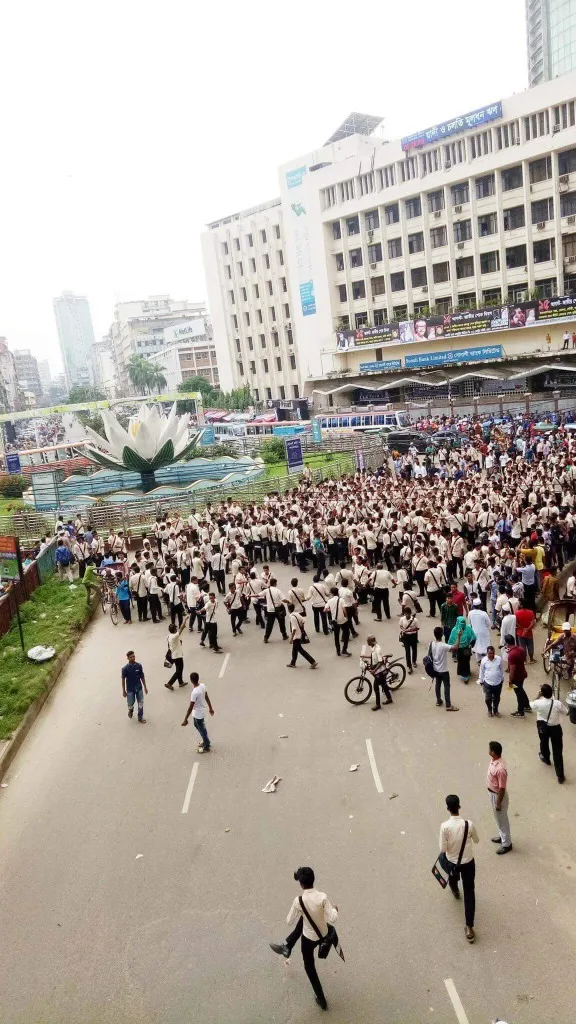
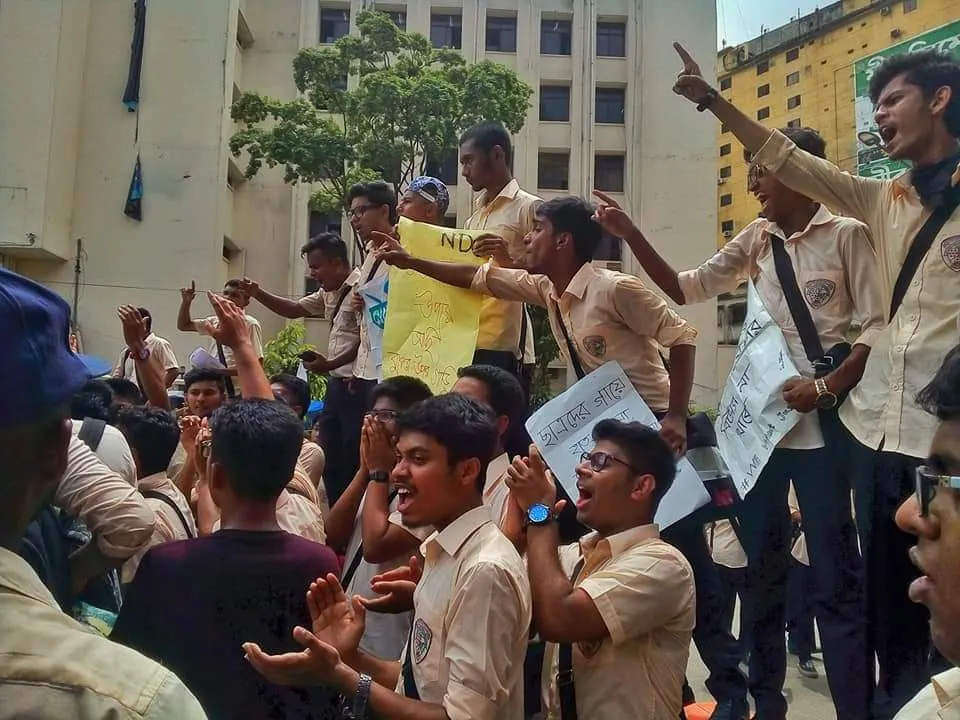
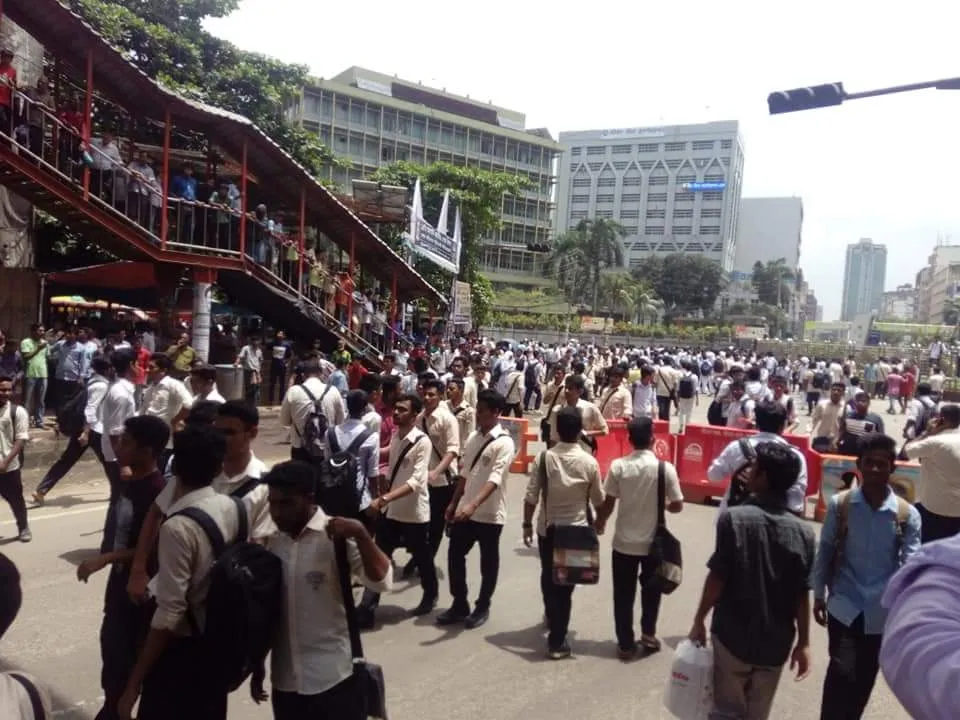
At exactly 12:40 PM, the dam broke. Hundreds of students wearing the distinguished blue-and-white Notre Dame College uniform poured out from Arambagh, converging simultaneously with first-year peers to establish a peaceful, impenetrable blockade across Shapla Chottor. Thousands of students joined in rhythmic unison, raising slogans demanding systemic transit governance, strict driver licensing, and accountability.
When a state-run BRTC double-decker bus attempted to forcefully breach the peaceful gathering, students broke its front windshield to prevent a potentially catastrophic collision and halt its wheels. For over five intense hours, high school teenagers controlled the crossroads with absolute unity until returning home at 6:00 PM, aware that something historic had just begun.
"Around 12:40 PM we broke out and instantly blocked Shapla Chottor. Thousands of students gathered in unison, proving that collective conviction can halt an entire metropolis."
DAY 03 // 01 AUGUST 2018
Civic Leadership & The Invention of the Emergency Lane
Teenagers Enforcing Traffic Laws, License Checks, and Humanitarian Corridors
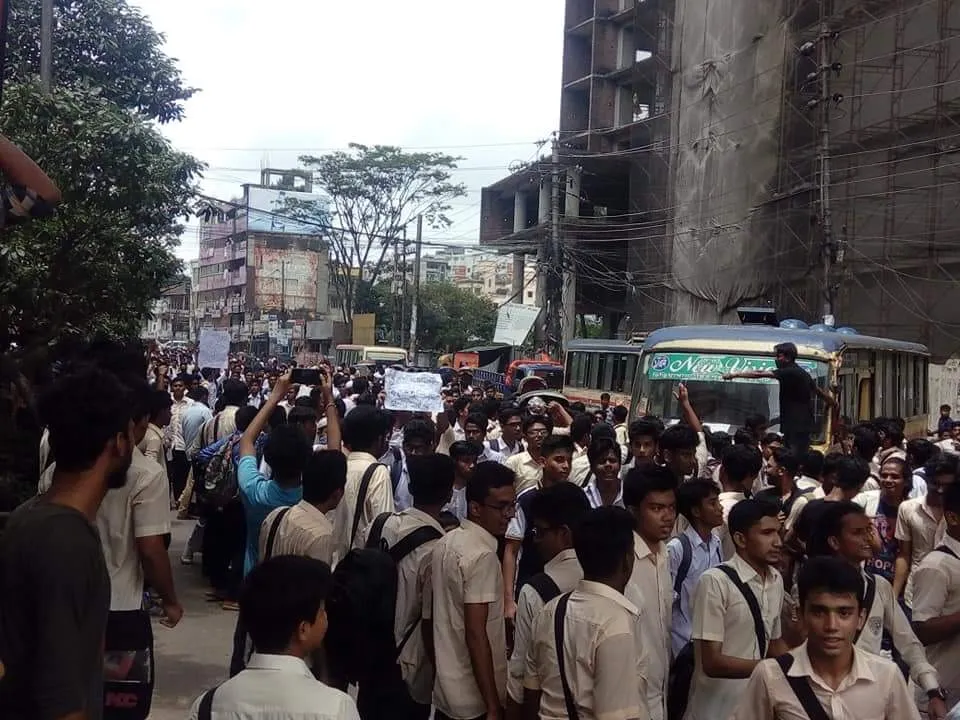
On Wednesday, 1 August, the momentum of Notre Dame College inspired schools, colleges, and universities across the capital. From Uttara and Farmgate to Shahbagh, Science Lab, and Dhanmondi, hundreds of thousands of uniform-clad teenagers took control of Dhaka’s streets. The city was paralyzed to standard vehicular commerce, yet remarkably, it had never been more orderly.
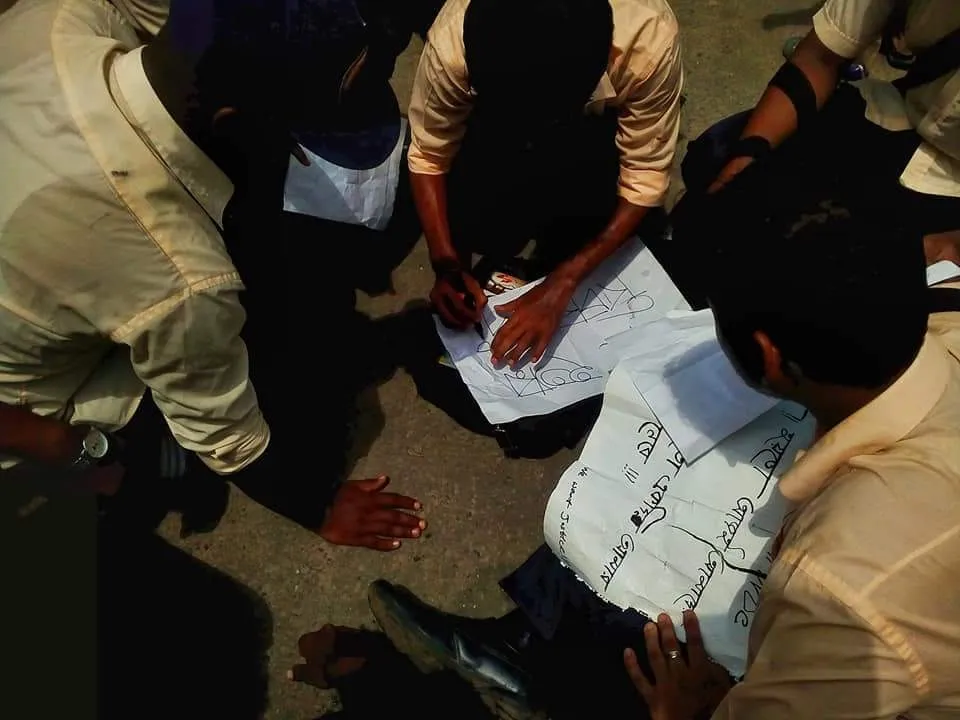
High school students took on the responsibilities that public authorities had neglected for decades. Armed with hand-drawn placards and polite assertiveness, teenagers inspected the driving licenses of commercial drivers, government officials, police vehicles, and private car owners alike. Unlicensed drivers and unfit vehicles were asked to turn around or park respectfully on the sidelines.
The most revolutionary achievement of that day was the spontaneous creation of Dhaka's first-ever Dedicated Emergency Lane. In a city notorious for gridlock where emergency vehicles routinely remain trapped for hours, students divided the multilane avenues using human chains, reserving a pristine, unobstructed corridor strictly for ambulances, doctors, and emergency first responders. It was a stunning demonstration of civic maturity, empathy, and decentralized systems governance.
"And the best part—we created an emergency lane for ambulances for the first time in Dhaka’s history. Teenagers showed what genuine civic discipline looks like."
DAY 04 // 02 AUGUST 2018
Police Blockades, Street Infiltration & A Mature Epiphany
Facing the Institutional Gates and Learning the Complexities of Civic Duty
On Thursday, 2 August, the institutional pushback intensified. When my peers and I arrived at Arambagh early in the morning intending to rejoin the civic vigil, heavy police contingents were stationed directly at the gates of Notre Dame College. Law enforcement barred students from gathering on the thoroughfares and compelled us into the campus grounds for scheduled classes and laboratory sessions.
We completed our academic duties, remaining inside the campus until the 6:00 PM dismissal bell. Stepping out through the college gate, the atmosphere was dramatically altered. The pavement was littered with shattered glass, burned tires, and signs of agitation. Outside political factions and opportunists had infiltrated the fringes of the movement, generating calculated violence and vandalism. It was painfully evident that no genuine student of our college or neighboring institutions had committed those acts.
Walking home through the quiet aftermath, a mature realization took root. It is easy for students to blame bus drivers and helpers for everyday misconduct, but mutual respect is a two-way social contract. While students frequently complained about driver behavior, students themselves often treated working-class transit workers with entitlement, rudeness, and hostility.
"As a student, we have to be polite, abide by the rules, and encourage others to do so by our acts. Reform is not just demanding accountability from others—it begins with our own conduct."
Reflection
The Notre Dame Ethos & Mutual Dignity
As Notredamians, we were taught never to engage in petty arguments over subsidized "half-pass" bus fares. We treated helpers and drivers with basic human dignity. In return, drivers recognized our uniforms and looked after us—squeezing us onto crowded morning buses even when passengers complained, ensuring we never missed exams. Mutual dignity yields mutual respect.
The Spark of Uncompromising Courage
Standing at the forefront of Shapla Chottor unlocked a permanent moral conviction. It gave me the courage to stand up against injustice, the confidence to speak out when things are wrong, and the leadership resolve that continues to define my civic duty and moral compass.
The Power of Collective Conscience
High school teenagers without institutional authority successfully organized traffic lanes, protected emergency services, and held powerful institutions accountable. When a community unites behind an uncorrupted, noble purpose, systemic transformation is always possible.